How to Decorate a Small Living Room: 12 Designer-Approved Tips That Actually Work
Learn how to decorate a small living room with expert tips on furniture layout, color, lighting, and storage that make any space feel bigger and more stylish.
DESIGN GUIDES
8/13/20264 min read

How to Decorate a Small Living Room: 12 Designer-Approved Tips That Actually Work
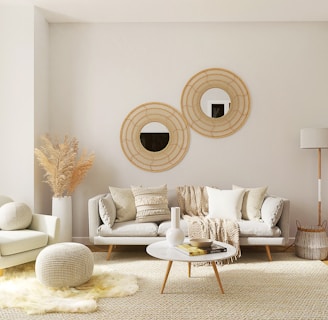
A small living room doesn't have to feel cramped, cluttered, or like a design afterthought. With the right layout, color palette, and a few smart styling tricks, even a compact space can feel open, intentional, and full of personality. Whether you're working with a cozy apartment corner or a narrow city-home floor plan, these strategies will help you decorate a small living room that looks — and lives — bigger than it is.
1. Choose a Light, Cohesive Color Palette
Dark, busy colors can visually shrink a room, while light and mid-tone neutrals bounce light around and open things up. Stick to a palette of two or three main colors, and let your walls, large furniture, and rugs share a similar tone family. If you love the look of a more elevated, hotel-style neutral scheme, a soft luxury decor design guide can help you layer whites, creams, and warm textures without the space feeling flat or sterile.
2. Scale Furniture to the Room
One of the biggest small-living-room mistakes is buying furniture sized for a showroom instead of your actual square footage. Look for:
Sofas with slim, tapered arms instead of bulky rolled arms
Armless or slipper chairs instead of oversized recliners
A coffee table proportional to your sofa (roughly two-thirds its length)
Nesting or stacking tables that expand only when needed
Oversized furniture doesn't just take up floor space — it visually dominates the room and makes ceilings feel lower.
3. Float Furniture Off the Walls (When You Can)
It feels counterintuitive, but pushing every piece against the wall can actually make a small room feel more awkward and empty in the middle. Pulling your sofa a few inches away from the wall and angling a chair creates a more intentional, "designed" layout, even in a tight footprint. Leave clear walking paths of at least 24–30 inches between pieces.
4. Use Multi-Functional Furniture
In a small space, every piece should earn its keep. Look for:
Ottomans with hidden storage
A console table that doubles as a media stand
A daybed that functions as both seating and a guest bed
Nesting tables that tuck away when not in use
This keeps clutter contained without sacrificing style or function.
5. Anchor the Room With a Well-Styled Coffee Table
The coffee table is often the visual centerpiece of a small living room, so it's worth getting the styling right. A few stacked books, a textured tray, and one small decorative object is usually enough — overloading it will make the whole room feel busier than it is. If you want a formula for getting the balance right, our guide on how to decorate a coffee table breaks down exactly what to include (and what to skip).
6. Add a Large Statement Mirror
Mirrors are one of the most effective small-space tricks in the book. A single large mirror — leaned against a wall or hung opposite a window — reflects natural light and creates the illusion of depth. Avoid scattering several small mirrors, which can feel busy; one oversized piece makes a much stronger impact.
7. Layer Your Lighting Instead of Relying on One Overhead Fixture
A single overhead light source flattens a small room and makes it feel more like an office than a living space. Instead, combine:
A floor lamp in a reading corner
A table lamp on a console or side table
Accent lighting, like a picture light or LED strip
This kind of layering lighting approach adds warmth, dimension, and coziness, and it lets you adjust the mood depending on the time of day.
8. Go Vertical With Storage and Decor
When floor space is limited, the walls become prime real estate. Tall bookshelves, floating shelves, and wall-mounted cabinets draw the eye upward, which makes ceilings feel higher and rooms feel more spacious. Use the top shelves for decor and the lower, more accessible shelves for everyday items.
9. Choose a Rug That's (Almost) Too Big
A rug that's too small is one of the most common small-room mistakes — it visually chops the space into pieces. Instead, size up: ideally, all your furniture's front legs (or all four legs of smaller pieces) should sit on the rug. A properly sized rug grounds the seating area and makes the whole room feel more unified.
10. Keep Window Treatments Simple and High
Hang curtain rods a few inches below the ceiling rather than directly above the window frame, and let curtains skim the floor. This trick draws the eye upward and creates the illusion of taller windows and ceilings — one of the easiest, lowest-cost ways to make a small room feel grander.
11. Edit Your Decor Ruthlessly
Small rooms show clutter faster than large ones. Instead of many small decorative objects, choose fewer, more intentional pieces — a great piece of art, a textured throw, one meaningful sculptural object. Quality and restraint read as luxury; quantity reads as clutter. A soft luxury decor design guide can be a helpful reference if you're trying to curate a more elevated, editorial look rather than a busy, maximalist one.
12. Bring in Scent as Part of the Design
Decor isn't only visual — a signature scent can make a small living room feel finished, cozy, and intentional in a way that's easy to overlook. A candle or diffuser on your coffee table or console does double duty as both a decorative object and a sensory layer. If you're building out the space with elevated finishes, it's worth pairing them with equally elevated luxury home fragrances rather than an afterthought candle from the drugstore aisle.
Quick Small Living Room Checklist
✅ Light, cohesive color palette (2–3 tones max)
✅ Furniture scaled to the room, not the showroom
✅ At least one large mirror
✅ Layered lighting (overhead, task, accent)
✅ One appropriately oversized rug
✅ Vertical storage to draw the eye up
✅ A well-edited coffee table styling
✅ Curtains hung high and long
✅ A signature scent to finish the space
Final Thoughts
Decorating a small living room is less about fitting more in and more about being intentional with what you keep. Focus on scale, light, and a few well-chosen statement pieces, and your space will feel considered and comfortable rather than cramped. And once your living room is dialed in, the same principles — restraint, layering, and quality over quantity — apply beautifully if you're ready to tackle your next space, whether that's refreshing your bathroom decor for small bathrooms or extending your new palette throughout the rest of your home.
Follow
© 2026. All rights reserved.
Some links may be affiliate links.
As an Amazon Associate I earn from qualifying purchases.